Stay for the exhale
I turned a yoga teacher's classes into a membership product. I did the strategy, the design, the build and the operations.
- Question
- How do you grow a teacher's community when her time and her voice are the product?
- Data
- One founder with a few hours a week, a loyal room of students, no product
- Method
- One rule for each decision: protect her time, keep her voice, take all other work myself
- ResultReal data
- A web app and an iOS app, a printed way in, live sessions, and a system I run with no agency
The repository is private. The founder owns the product data, so this page gives no member, usage or revenue numbers.
I found the opportunity as her student
I attended Matthäa’s yin classes. Her room was full and loyal, and she wanted that community to grow without a dependence on social media. She had no product and only a few hours a week to give to one.
I proposed to build a home for that community and to run all of it except the teaching. She said yes.

One constraint set the strategy
Matthäa’s time and voice are the product. So I set one rule for each decision: protect her time, keep her voice, and take all other work myself.
Protect her time.
Each feature must cost her minutes, not days.
Keep her voice.
She approves each word that a member reads.
I take the rest.
Strategy, design, build, operations.
That rule explains each choice below. Each one gives members more of Matthäa and costs her almost no time.
Five moves a standard app project does not make

A paper butterfly as the front door
Her students own books and keep objects. I designed a bookmark that folds into a butterfly, with her words on it and a printed code that opens the app. It puts Cocoon into a member's day without an advert, and each printed piece reports how many people it brought in.
Designed and printed
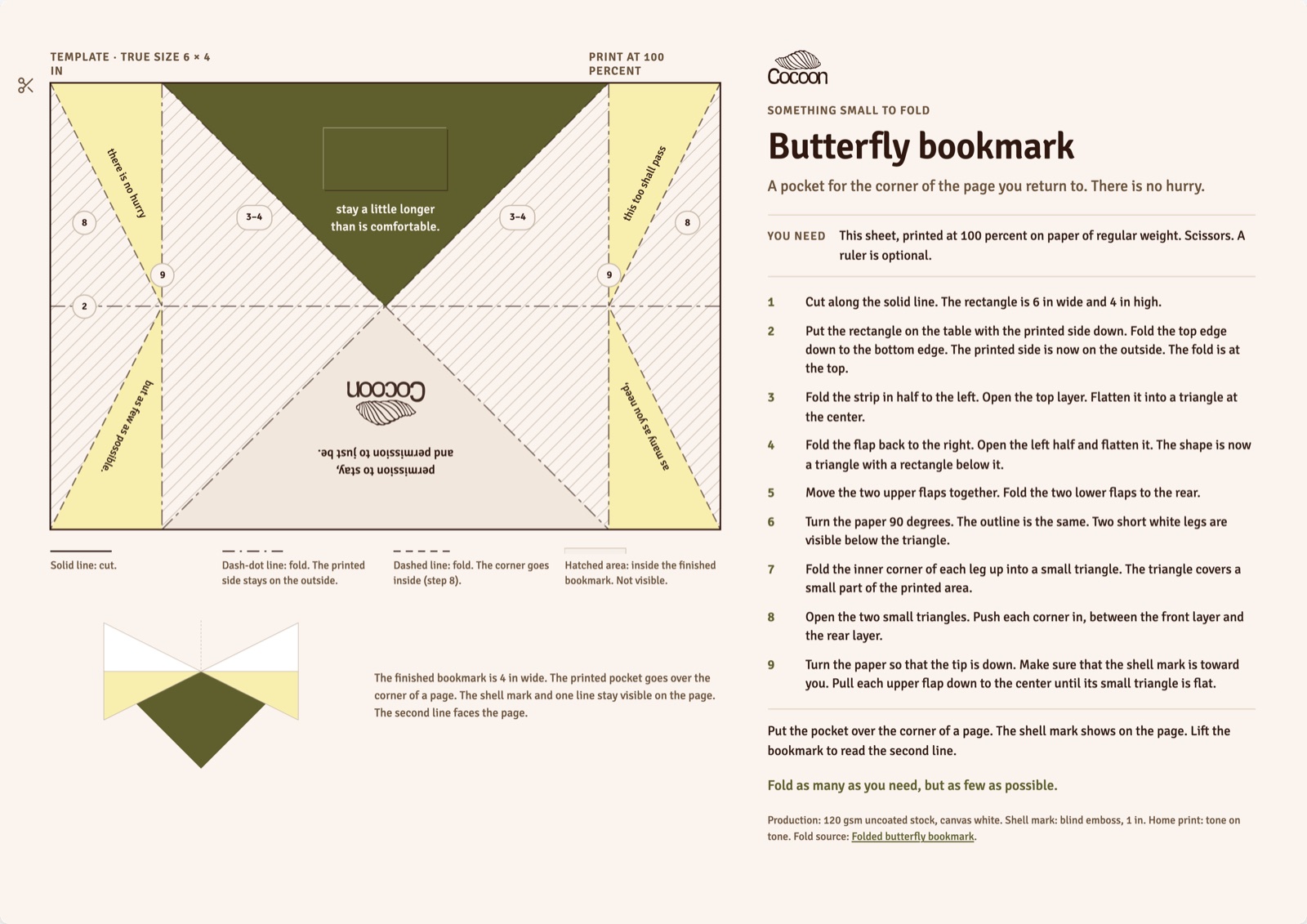
The print sheet, with the fold steps. Tap to try
A person who scans or taps the bookmark is in a practice in seconds, with no download, no account and no payment. The offer to join comes after the practice. The feature is built. The tags go on the next print run.
Built. The tags go on the next print run.
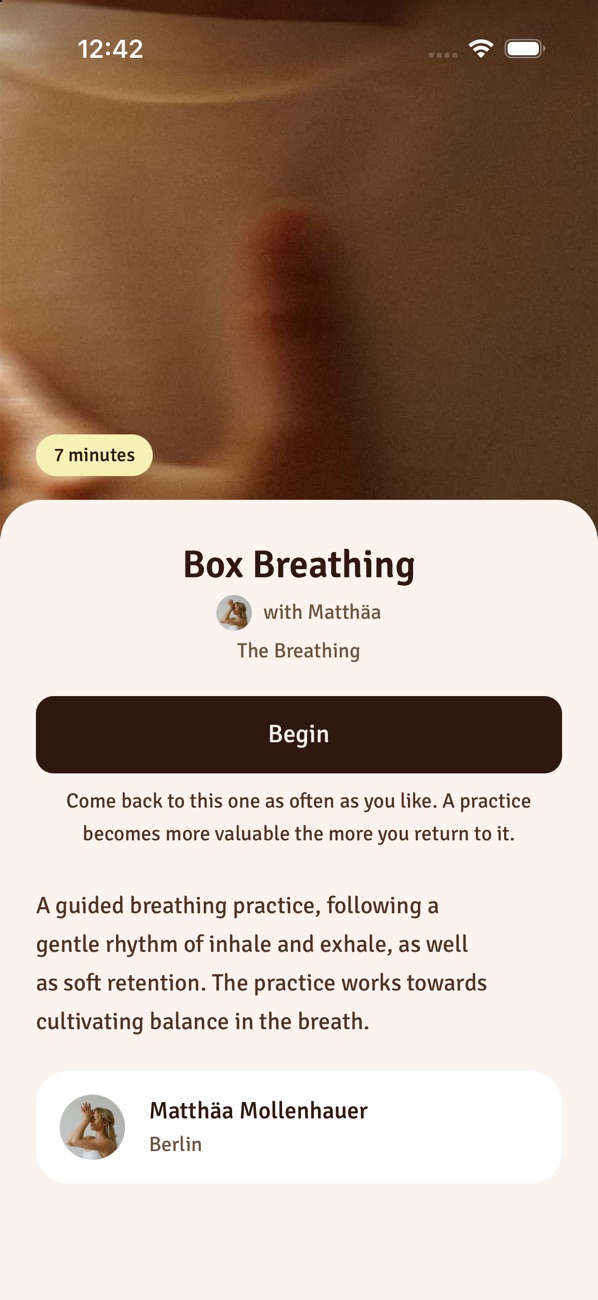
The practice page that opens from a tap. Her handwriting on the home screen
I turned Matthäa's handwriting into a font. Members see one line from her each day, in her hand, on their phone. It feels personal each day and takes none of her time.
In the iOS app
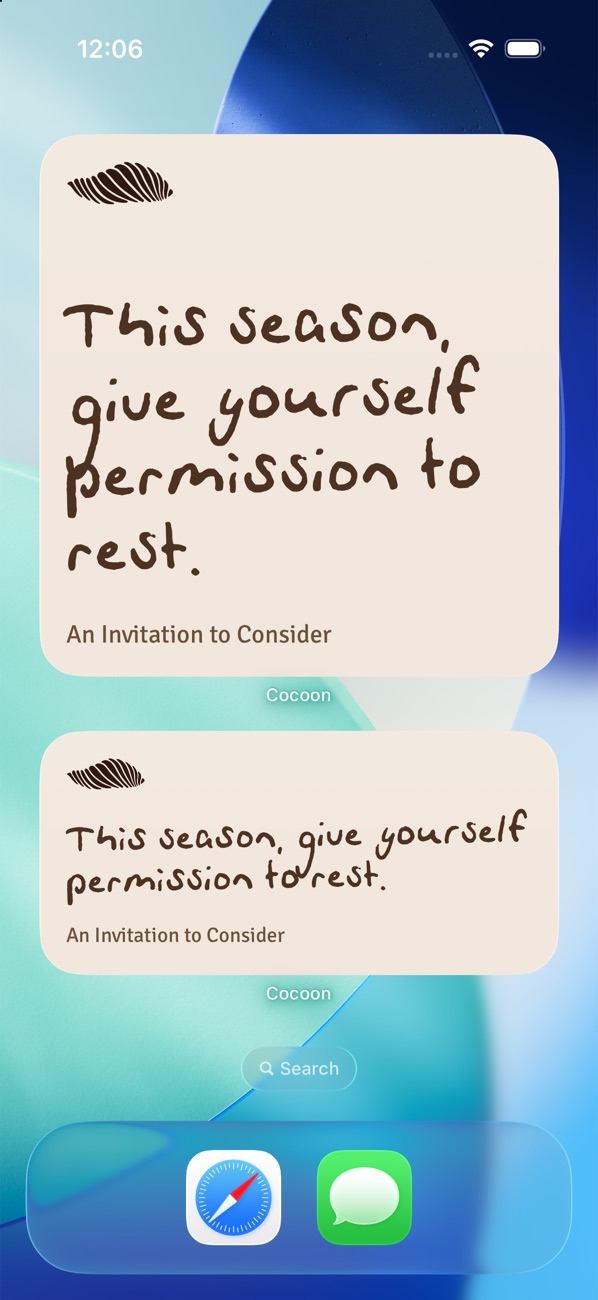
One line from her, in her hand, on the home screen. Live Circles
I proposed a live session for members inside the app and set it up from end to end. The first one ran on 1 November. It was my idea, and I was proud when it worked.
Running
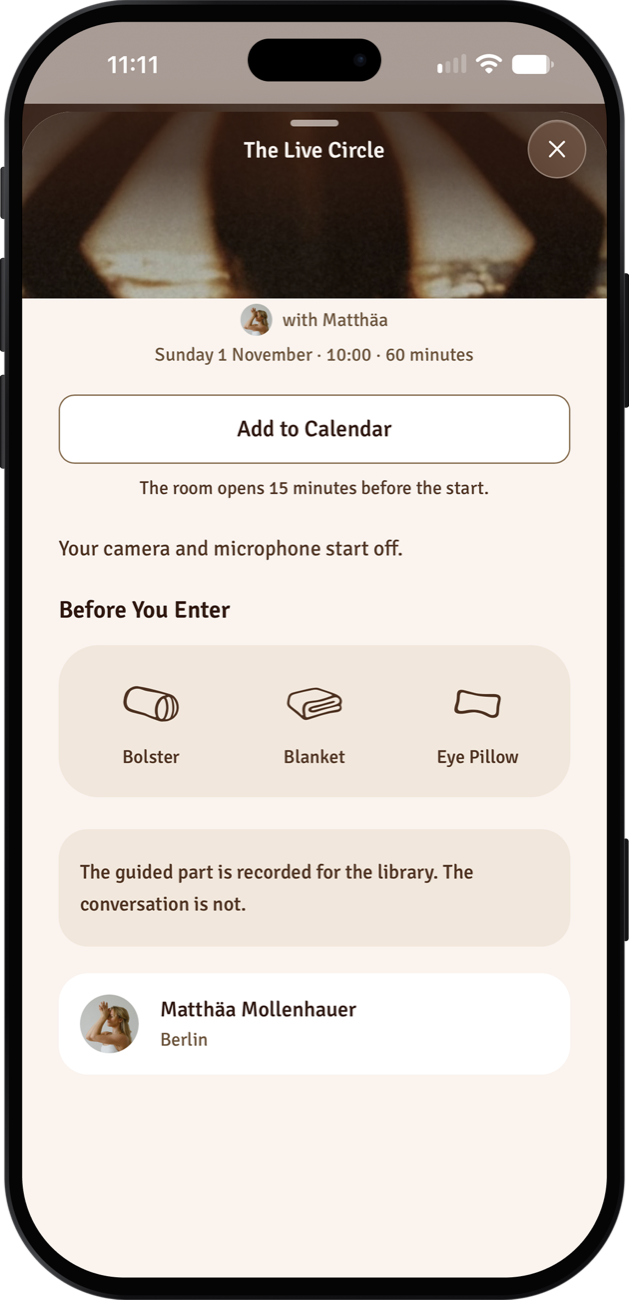
The Live Circle page in the app. The full system, with no agency
I set up hosting, the database, payments, video, mail and the App Store account, and I run them. Cocoon has no developer team and no retainer to pay.
In operation
The system I set up and run
Real data
- Member. Phone or browser.
- Cloudflare. Domain and web page.
- Cocoon app and API. Render, Frankfurt.
- Xcode Cloud. iOS builds.
- App Store. iOS app.
The iOS app reaches the member.
Services behind the app
- Supabase. Database.
- Stripe. Payments.
- Mux. Video.
- Brevo. Mail.
I set up each part and I run each part. Cocoon has no developer team and no retainer.


The design decisions were mostly mine
I set the look, the layout and the flow of the app, and I chose the typeface, Signika. Matthäa chose the palette. A friend of hers drew the logo and the icons.
Midway through the project I replaced the full design with a better one. I built the new design out of members’ sight and moved each member to it on one day.

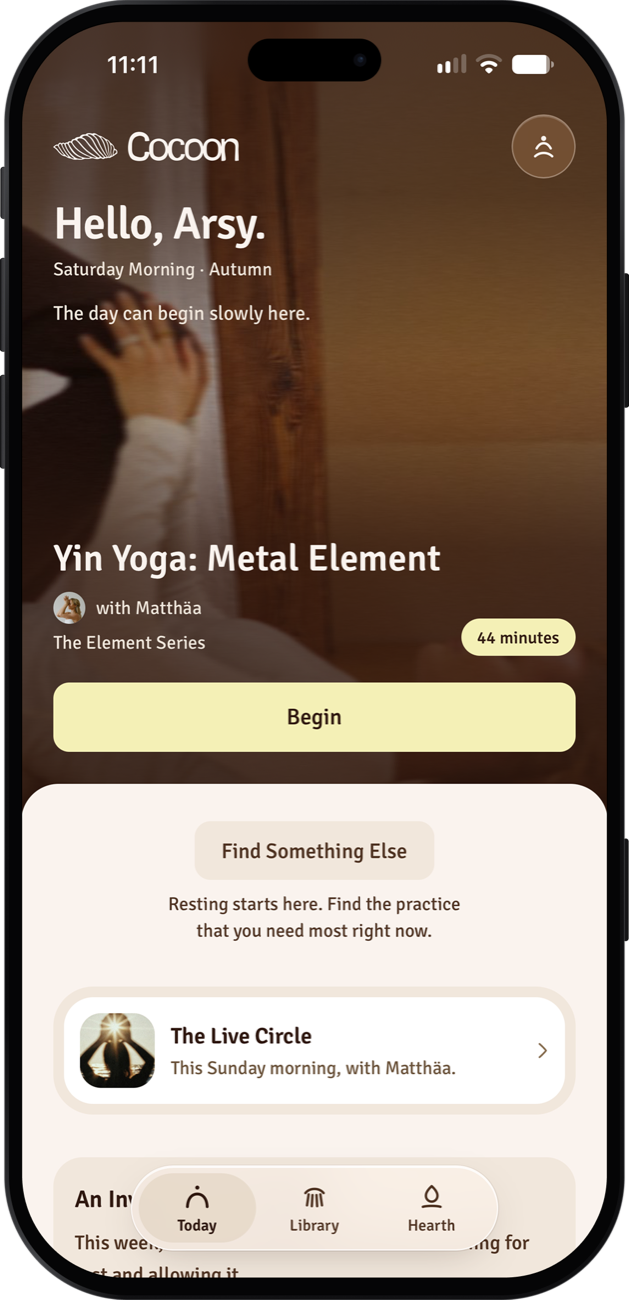
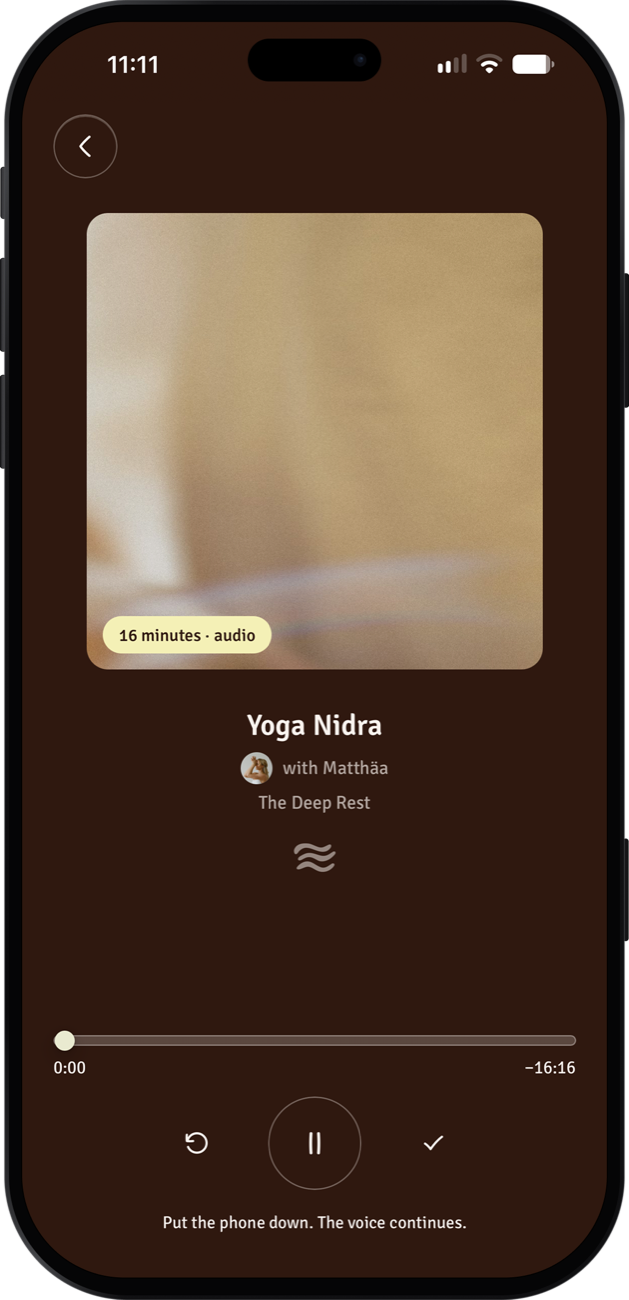
How I ran the project
- I wrote a plan before each change. There are 54.
- I logged each decision with its reason, so Matthäa and I can see why the product is the way it is.
- I changed a decision when the evidence changed. Seven of those changes have a date and a reason in the log.
- I closed 48 security findings before and after the App Store release.
- AI agents wrote most of the code. I decided what to build, set the checks and approved the result.
What this means for your team
I find the growth idea that is already inside a business, and I can explain it on one page.
I can take that idea from strategy to a product in people's hands without a handoff.
I work well with a founder who has little time. I bring decisions that are quick to answer.
I write things down, so the work does not depend on my memory.
More work
- A bank reconciliation that explains each difference
A working sample of the reconciliation method from my years as Operations & Finance Lead. Excel formulas match 119 bank lines to 121 ledger entries, explain each difference and reconcile to 0.00.
- SQL case studies: revenue share, donor segments and a 3NF schema
Three SQL studies on small course datasets. Each one starts with a business question. Every figure is query output that you can run again.
- Monthly owner report for a three-property portfolio
A rebuilt sample of the monthly report that each asset owner received: occupancy, rent roll, NOI against budget, capital projects and the NOI share of each owner.